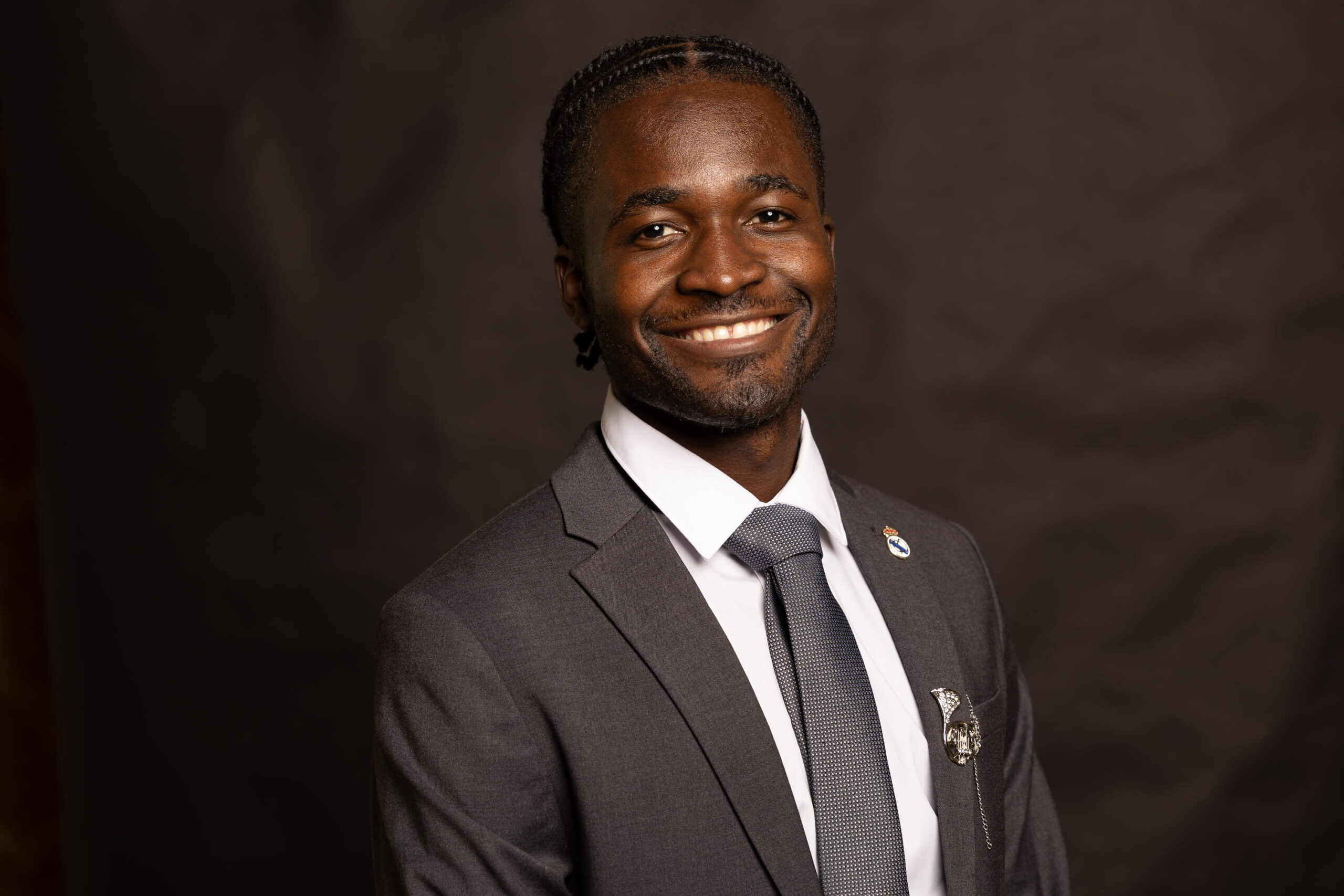
What led you to the world of engineering? When you look back at your childhood, was there a moment that made you think, “This is my path”?
Looking back, I do not think there was one specific moment that made me decide to become an engineer. It was a journey that started when I was a child. Mathematics and Physics were always my favourite subjects in school. I enjoyed solving problems, understanding how things worked, and helping others learn.
Growing up in Sambizanga, Luanda, I was always curious about machines, technology, and the way things were built. I often helped my younger siblings and neighbours with mathematics, and I even participated in study groups with friends. Those experiences taught me that I enjoyed not only learning but also finding solutions.
As I grew older, I realized that engineering combined everything I loved: problem-solving, creativity, and the opportunity to make a practical impact on people’s lives. That is what ultimately led me to Mechanical Engineering.
How did you feel when you first arrived in Hungary, surrounded by a new culture and language?
To be honest, I felt excited and scared at the same time.
Coming from Angola to Hungary was a huge change. Everything was different: the language, the weather, the food, and even the way people interacted. I arrived without speaking Hungarian and with very limited English, so simple daily tasks often felt challenging. There were moments when I felt lost and overwhelmed. However, I also knew that I had been given a life-changing opportunity, and I did not want fear to stop me from making the most of it.
Looking back now, those first difficult months became some of the most important moments of my personal growth.
„They taught me resilience, patience and the importance of stepping outside my comfort zone.”
— Luis Kinjuka Lisboa
How did learning Hungarian change your experience as an international student? Do you have a favourite expression by now that you often use?
Learning Hungarian completely transformed my experience in Hungary. At first, I learned the language because I needed it for my studies and daily life. As my Hungarian improved, I realized that language is much more than communication. It is a bridge to people, culture, and belonging.
Being able to speak Hungarian allowed me to build stronger friendships, connect more deeply with local people, and fully participate in university life. It made Hungary feel less like a place where I was studying and more like a place where I belonged. One expression I use often is “Lépésről lépésre”. It perfectly reflects my journey. I did not learn the language overnight, and I did not achieve my goals all at once. Everything happened step by step.
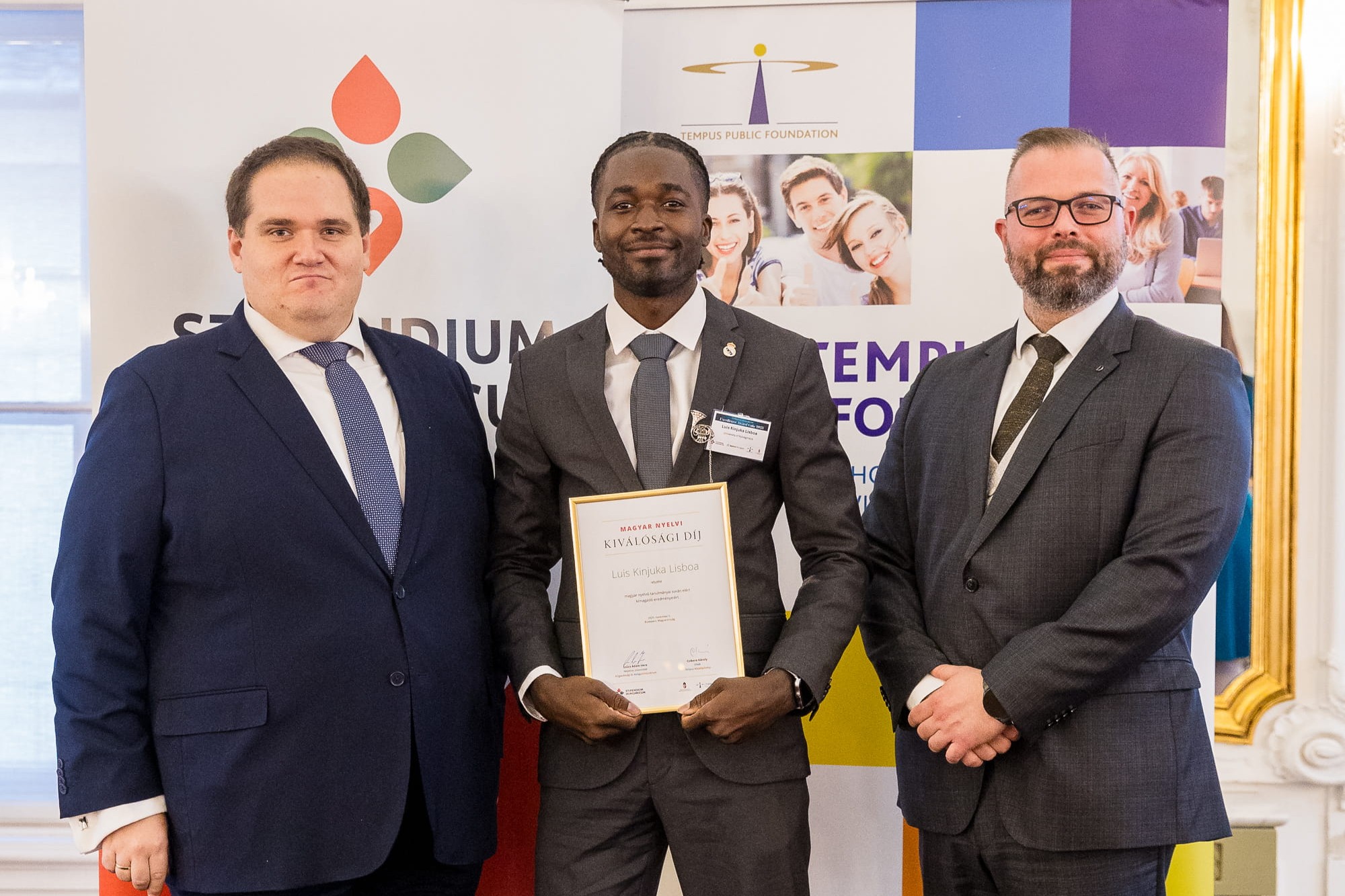

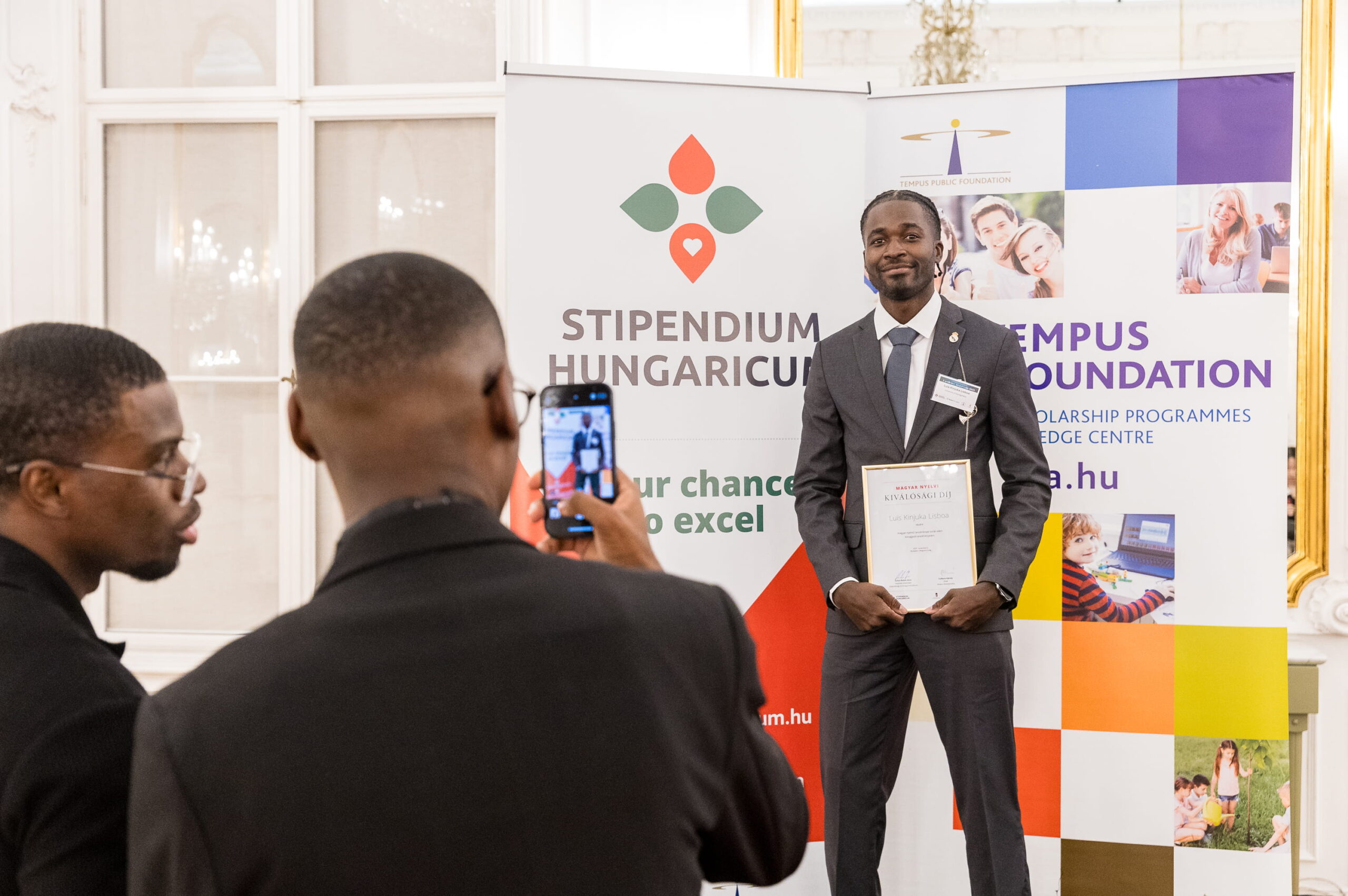
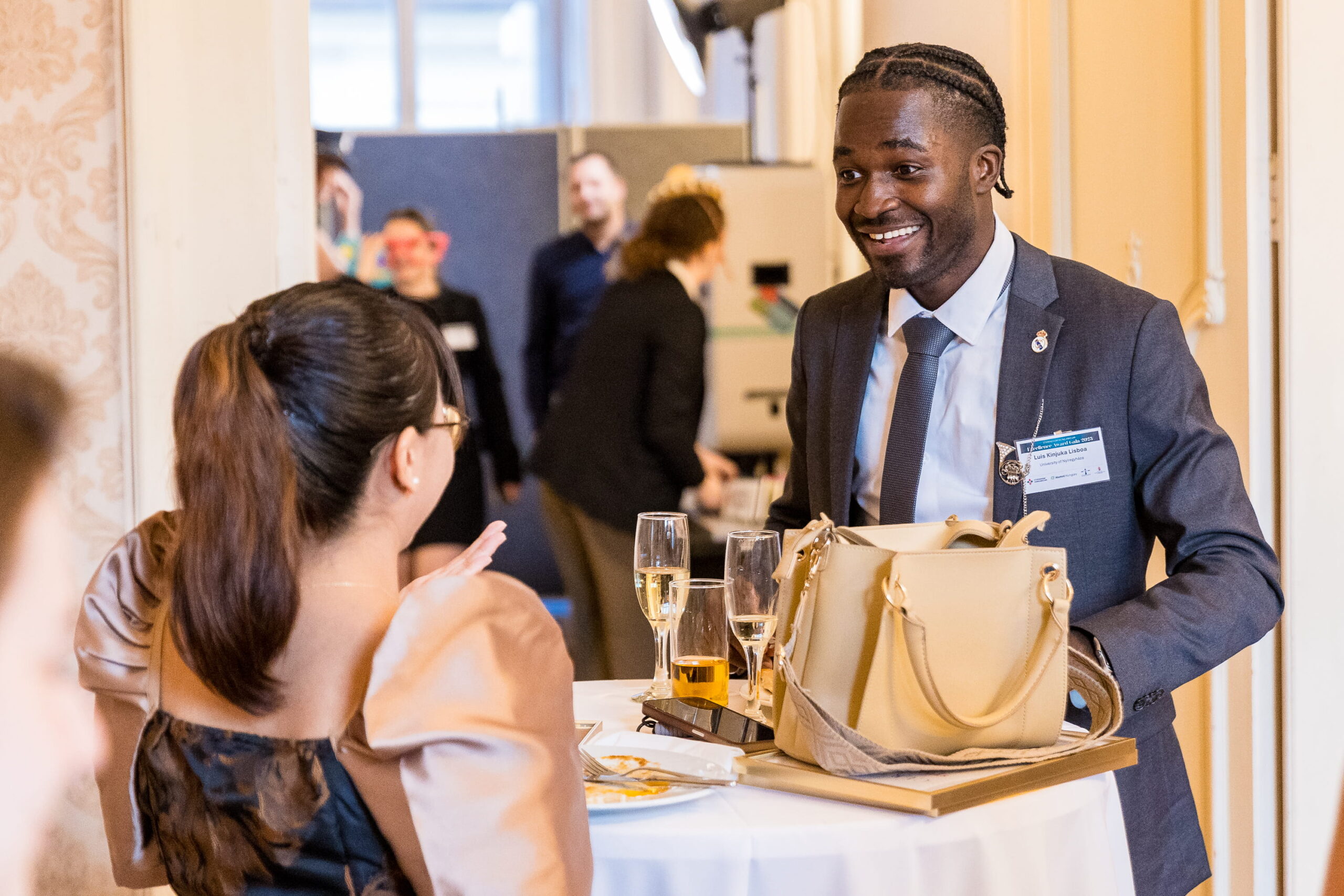
Do you remember a project or class that made you feel, “Yes, this is exactly what I want to do”?
One of the moments that confirmed my passion for Mechanical Engineering was working on engineering design and analysis projects during my studies. I enjoyed seeing how theoretical concepts from mathematics and physics could be applied to real engineering problems. It was exciting to analyse systems, understand how machines work, and think about ways to improve their performance.
I especially enjoyed projects that required both technical thinking and creativity because they showed me that engineering is not only about calculations; it is about creating solutions that can improve people’s lives. That was when I realized that Mechanical Engineering was not just something I was studying. It was something I genuinely wanted to do for my future career.
What have you learned about yourself through this international journey?
This journey taught me that I am capable of much more than I once believed.
Before coming to Hungary, I knew I was hardworking, but I had never been tested in such a different environment. Living far from my family, adapting to a new culture, learning a new language, and studying in Hungarian challenged me in ways I could never have imagined.
Through these experiences, I learned that growth often happens when we are uncomfortable. I learned to be patient with myself, to embrace mistakes as part of learning, and to trust the process even when the outcome is uncertain.
Most importantly, I learned that resilience is not about avoiding struggles. It is about continuing to move forward despite the challenges.
If you could introduce Hungary to a student who is hesitant to apply, how would you encourage them? Do you have any advice?
I would tell them not to let fear make the decision for them.
Studying abroad can feel intimidating, especially if you are leaving your home country for the first time. I understand that feeling because I experienced it myself. However, some of the greatest opportunities for growth exist outside our comfort zones.
Hungary offers quality education, a rich culture, and an environment where students from all over the world can learn and grow together. Beyond academics, it teaches independence, adaptability, and confidence.
My advice would be simple: arrive with an open mind, be patient with yourself, and embrace every opportunity to learn. The experience may change your future, but it will also change you as a person.
Do you feel connected to your community here? What has your social life been like during your journey? Do you have a favourite memory?
One of the most valuable parts of my experience in Hungary has been the people I met along the way. I found support among fellow Angolan students, international students from different countries, Hungarian classmates, and professors.
Over time, these relationships helped transform Hungary from a place where I studied into a place where I felt at home.
One of my favourite memories is celebrating important milestones with friends who became like family. Being surrounded by people from different cultures taught me that friendship can overcome language, distance, and cultural differences.
Those connections are among the things I will cherish most from this journey.
Learning Hungarian is not an easy task. How was your language learning process, and how could you benefit from it while living here?
Learning Hungarian was one of the biggest challenges I have ever faced.
When I arrived, I could barely understand anything. At times, even simple conversations felt difficult. There were moments of frustration, but I reminded myself that every new word was progress.
Over time, I became more comfortable speaking, listening, and studying in Hungarian. The process required patience, consistency, and a willingness to make mistakes.
Today, I see language as one of the greatest gifts this experience has given me. It allowed me to connect more deeply with people, better understand the culture, and complete my Mechanical Engineering degree in Hungarian. It gave me a sense of belonging that would have been impossible otherwise.
What motivated you to go beyond basic survival phrases and truly commit to mastering Hungarian?
At first, necessity motivated me.
I needed Hungarian for my studies, daily life, and communication. However, as time passed, my motivation became much deeper. I realized that language is the key to understanding people and culture. I did not want to remain a visitor observing Hungary from the outside. I wanted to participate fully in the experience.
Learning Hungarian allowed me to build stronger relationships, gain confidence, and feel truly integrated into my environment. Every step forward made me more motivated to continue learning.
What kind of engineer do you hope to become — a designer, a researcher, an innovator, or a problem solver?
I hope to become an engineer who combines all these qualities, but above all, a problem solver.
Engineering is ultimately about finding practical solutions to real challenges. Whether through design, research, innovation, or leadership, my goal is to contribute to projects that improve people’s lives and support technological development. I am particularly interested in applying engineering knowledge to industrial systems, energy, and infrastructure, especially in developing environments where engineering solutions can have a meaningful impact.
I want to be the kind of engineer who not only understands how systems work, but also how to make them better.
What does a typical day look like for you when you’re not on campus? Do you have any hobbies?
I enjoy spending time with friends, exercising, listening to music, and exploring new places. I also enjoy reading and learning about topics related to personal development and engineering. Sometimes I simply like to take walks around the city and reflect on my journey.
I believe maintaining a balance between academic responsibilities and personal well-being is important. These activities help me relax, stay motivated, and maintain a positive mindset.
What are your plans after graduation? What is your dream?
I plan to continue developing my expertise through Master’s studies in Mechanical Engineering.
My long-term goal is to become a highly skilled engineer capable of contributing to industrial and technological development. I would like to work on projects related to mechanical systems, energy, and innovation while continuously expanding my knowledge.
Beyond professional success, my dream is to inspire young people from communities similar to the one I grew up in.
„I want to demonstrate that circumstances do not define potential and that education can open doors that once seemed impossible to reach.”
— Luis Kinjuka Lisboa
Students say that they feel connected to their international community. How will you keep in touch with your community after you graduate?
One of the greatest gifts of studying abroad is the network of friendships and connections you build.
I believe staying connected is more than just communication. It is about continuing to support one another, celebrating achievements, and remaining part of each other’s journeys.
Although graduation may take us to different countries and different careers, I believe the friendships and connections built during this experience will remain an important part of my life for many years to come.
Previously on Voices of Stipendium Hungaricum…
“Not Every Denial Is a River in Egypt”: The Journey of Shahd Ayman Mohamed Aly Gaafar Negm
Follow our updates!
Stipendium Hungaricum Excellence Gala