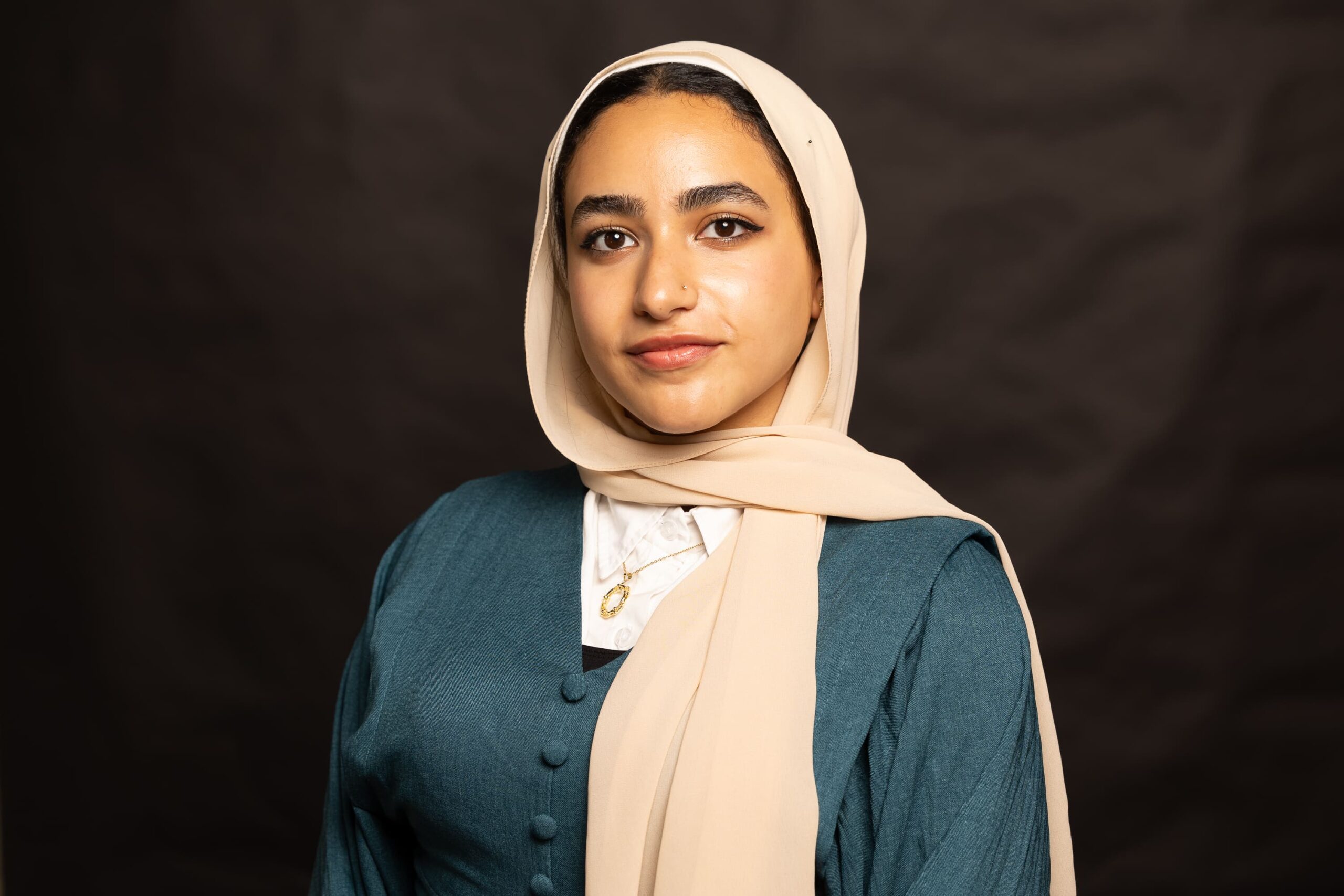
As we begin this conversation, we step into Shahd’s world: a place where engineering meets ambition, and where a young woman’s determination transforms opportunity into achievement.
When people hear “Excellence Award,” they imagine a perfect, linear success story. What’s the part of your journey that doesn’t fit that narrative?
That could be one of the things I am proud of today once felt like a failure. I worked on my thesis idea for a whole semester, believing in it and putting so much effort into it, but at the end, the idea was rejected. At that moment, it was very hard not to take it personally. I started doubting myself and questioning whether I was good enough, or whether I had wasted my time. But after the disappointment, I decided not to let that be the end of the story.
I developed the idea, improved it, and presented it again the next semester. This time, the reaction was completely different, and people were impressed by the work. That experience changed the way I see failure.
„Sometimes rejection is not the opposite of succes; sometimes it is a beginning of better version of it.”
— Shahd Ayman Mohamed Aly Gaafar Negm
Mechatronics is a demanding field. What keeps you motivated on the tough days, and what achievement are you most proud of so far?
What keeps me going through the tough days is that I genuinely love this field. Since high school, I loved mathematics deeply, and for a long time my dream was to become a mathematician. Mathematics always gave me a special feeling, the feeling of curiosity, challenge, and joy when something finally makes sense. Then, in grade 12, I was introduced to robotics, and I felt that I had found the practical side of that love. I realized that I did not only want to solve problems on paper; I wanted to use mathematics to build, move, control, and create something real. That is why mechatronics felt right for me.
What I am most proud of is that I kept pushing myself until the end. Not because it was easy, but because I never truly regretted choosing this path. Even in the most difficult moments, a part of me still loved what I was doing. For me, that is an achievement: to finish the journey still connected to the reason I started.

Was there a moment in your childhood or teenage years that hinted you’d end up in engineering?
Since I was young, I loved mathematics, especially solving complex equations and difficult problems. It gave me a feeling that I cannot fully explain. I felt challenged, focused, and somehow closer to myself.
One of the moments that made me believe in this side of me was becoming first in Egypt in a mathematics competition. Later, when I started joining innovation and engineering competitions, I began to see that I also loved “smart” solutions, not only solving problems on paper. One project that stayed with me was the assistive smart glasses for blind users, where we worked on recognizing nearby objects, banknotes, colours, and walking directions with audio feedback. That was when I started feeling that engineering could turn ideas into something useful for people.
Before that, I think I was just following the flow. But mathematics, robotics, and competitions helped me understand myself better and realize what I truly love.
What’s the most unexpectedly difficult part of studying in Hungary — academically or socially?
It was more social, not academic. I came to Hungary as a foreign student without really knowing anyone, and at that time I was also more introverted. In the beginning, I thought I could handle everything alone, but living abroad slowly taught me that being alone all the time is not strength.
Hungary changed that part of me. It pushed me to open up, to talk to people, to ask for help, and to build connections. I realized that as human beings, we are not meant to go through everything completely alone. We need people, even if we are strong. So, the challenge was loneliness, but the lesson was connection.
„Studying in Hungary did not only teach me engineering. It also taught me how to be more open to people and to life.”
— Shahd Ayman Mohamed Aly Gaafar Negm
Describe a moment when you realized you were growing into someone your younger self would be proud of.
I think one of those moments was when I started feeling seen by my professors. When they gave me attention, listened to my ideas, or trusted me with difficult work, it made me see myself differently. For a long time, I think I needed proof that I was capable. Their support did not make the work easier, but it made me believe that maybe I really could do these things. Maybe I was not just trying hard but actually becoming someone capable.
You said your motto is “Not every denial is a river in Egypt, how you live is a choice, not a sentence passed by birth.” Was there a specific challenge or “denial” in your life that pushed you to choose your own path rather than accept circumstances?
The “denial” for me existed on two levels. The first was the limits that came from my circumstances and background, the quiet feeling that certain paths were not really meant for someone with my starting point. It was not always said out loud, but it was felt.
The second was what those limits created inside me. They became self-doubt. I started questioning whether I was good enough, whether I truly belonged in this field, or whether reaching what I wanted was even realistic for me.
But I learned that not every doubt deserves to become my truth. Circumstances are not conclusions, and doubt is not always the truth. Sometimes it is only fear speaking. I had to choose, consciously and repeatedly, not to accept every limit as a fact about myself.
This motto reminds me that I am not sentenced by where I came from or by the fears that grew there. I can still choose to continue, to try again, and to become more than what my circumstances once suggested I could be.
How has studying mechatronics in Hungary changed the way you see the world — and yourself?
I would not say studying in Hungary completely changed who I am, but it changed the way I see things. Before coming here, I had a strong desire to travel, to see the world outside my country, and to experience life somewhere different.
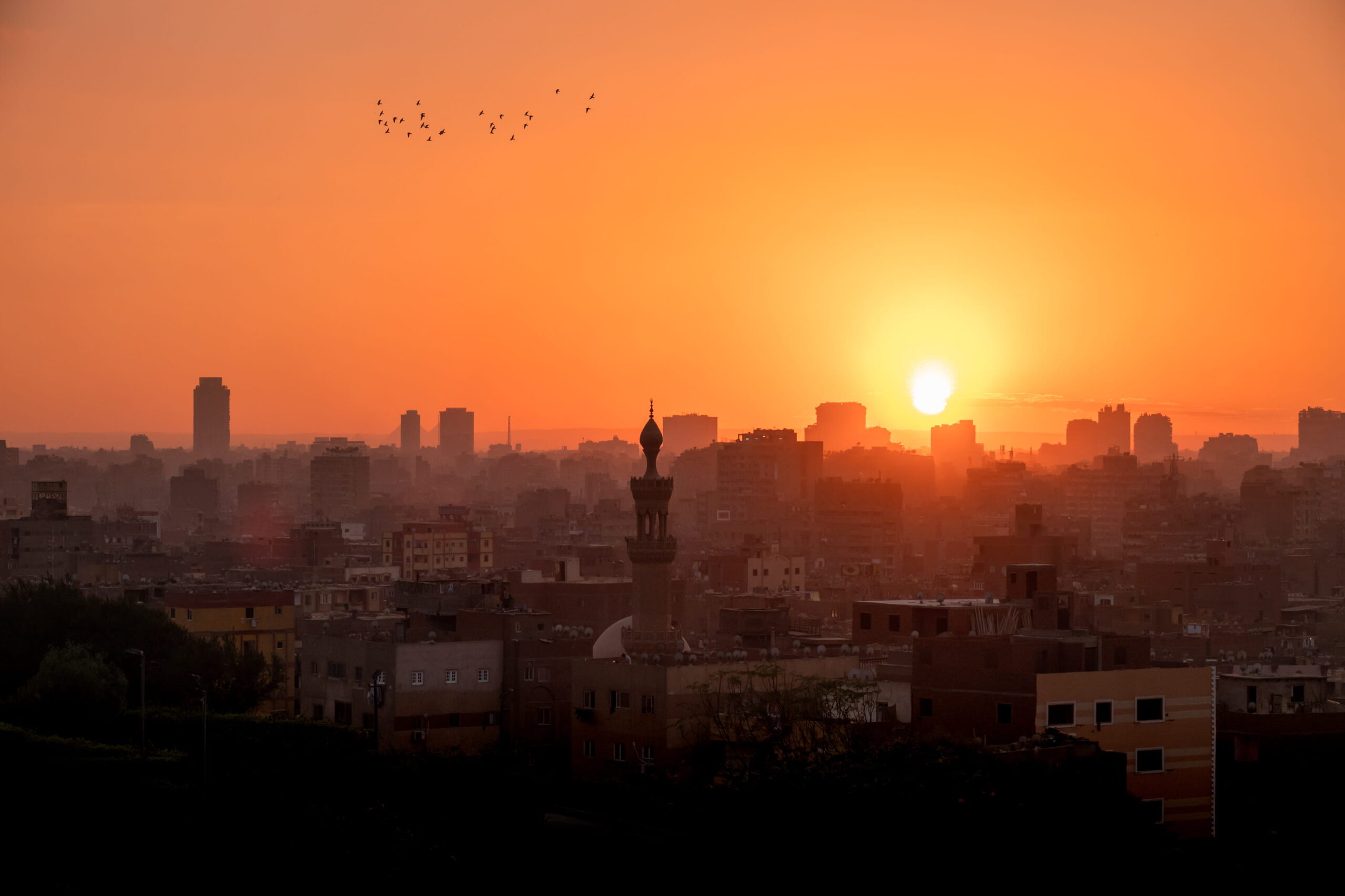
Hungary fulfilled that part of me. It allowed me to see new places, meet different people, and understand that the world is much bigger than the environment I grew up in. But at the same time, being away from Egypt made me see my own country differently.
Before travelling, I think I sometimes underestimated where I came from. But distance gave me a more balanced view. I realized that every country has its beauty, its struggles, and its value. Travelling helped me see the world, but distance helped me appreciate where I come from.
In that way, the journey did not only teach me about engineering. It taught me perspective.
Looking ahead, what are your plans after graduation? Is there a dream project, a field you want to explore, or a place you hope to make an impact?
Looking ahead, I truly want to become a quality control engineer, but not only in the sense of working with numbers or reports. I want to be involved in designing quality systems, improving inspection processes, and creating solutions that help detect problems before they reach the customer.
I also want to continue my studies and pursue a master’s degree while developing my thesis work further. My thesis opened my eyes to how much potential there is in combining quality control with automation, computer vision, and mechatronics.
My goal is to work in a field where quality is not just about checking the final product, but about building smarter systems that prevent mistakes from happening in the first place.
Do you have a favorite memory, trip or any adventure that will make you feel joyful when you remember back to your study years with the Stipendium Hungaricum journey?
One of the memories I will always remember with joy is my one-week Erasmus+ experience. It may sound like a short time, but for me it felt very special. I was in a new place, meeting people from different countries, sharing stories, laughing, and feeling that life had become much bigger than I once imagined.
What I loved most was the feeling of freedom. I was not only studying abroad anymore; I was actually living the dream I had before coming to Hungary. I was travelling, learning, connecting with people, and collecting memories that still make me smile.
That week reminded me that the Stipendium Hungaricum journey was not only about university, exams, or achievements. It was also about the small joyful moments when I looked around and thought, “I am really here. I am really living this.”
If your story could inspire one future student, what would you want them to take from it?
I would tell them not to lose hope and to keep trying, even when things feel unclear. There were moments in my journey when I doubted myself, when I felt lonely, or when I did not know if my efforts would lead anywhere. But looking back, I can see that every difficult moment was still shaping me.
„I want them to know that they do not need to have everything figured out from the beginning.”
— Shahd Ayman Mohamed Aly Gaafar Negm
Sometimes you only need to take the next step… then another one, and slowly you start becoming stronger than you thought.
Do not give up on yourself too early. Keep trying, because one day you may look back and realize that the version of you who struggled the most was also the version who built the life you are proud of.
Previously on Voices of Stipendium Hungaricum…
Follow our updates!
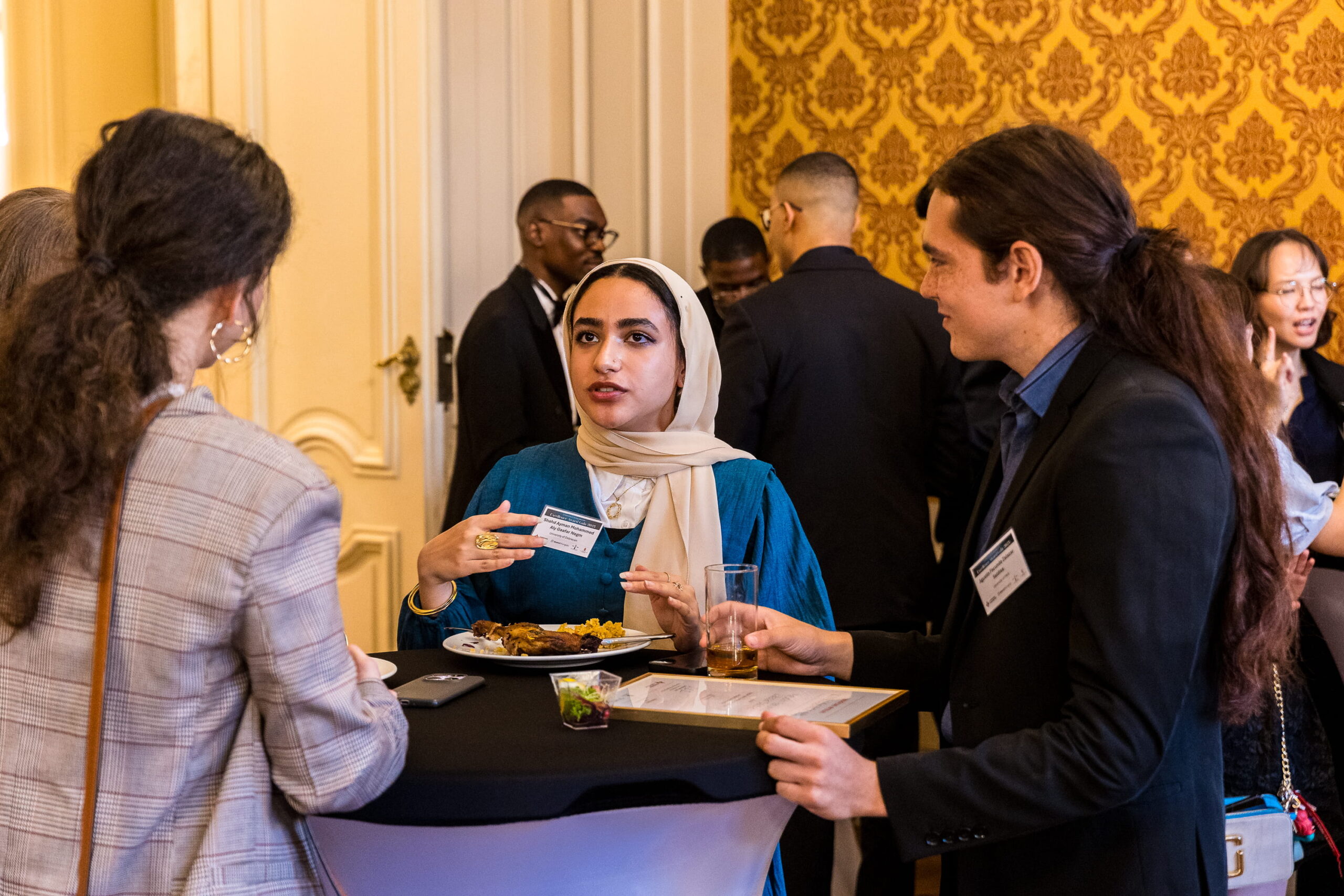
Stipendium Hungaricum Excellence Gala