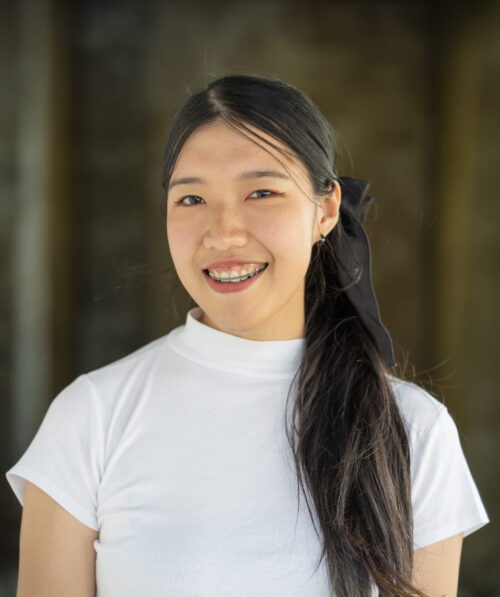
Could you tell us a little about your background and what first sparked your interest in Interaction Design?
I graduated with a bachelor’s degree in industrial design and when I was in my fourth year, I was selected as one of five student representatives from Bangkok to join the Specialized Youth Exchange Program, organized by the International Affairs Office, Bangkok Metropolitan Administration.
In this program, I worked together with students from Japan, on an “Application” project. At that time, I could design many things because of my Industrial Design background, but honestly, I felt like I was not really good at anything specific yet. I was able to join as a UX/UI designer, and that experience helped me learn a lot and improve my skills. During my thesis, I started to feel that I wanted to understand the UX/UI design field more deeply but also explore how design affects people through technology.
That’s when I discovered that there are many universities offering Interaction Design, which led me to continue in this path.
What inspired you to choose Hungary—and specifically MOME—for your master’s studies?
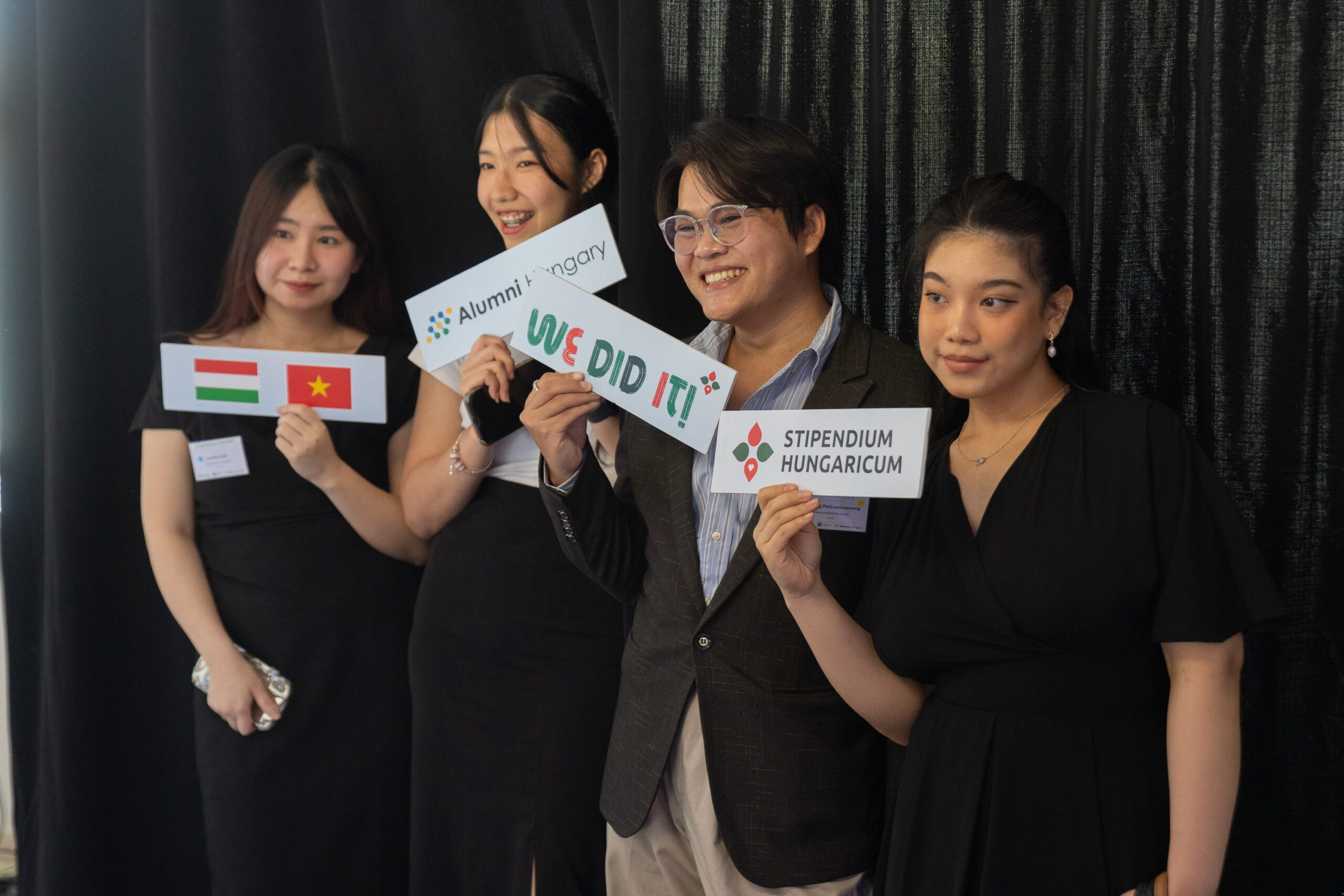
I really wanted to study abroad because I wanted to see the world and experience different perspectives. I had never been to Europe before, and it felt very far and difficult for me, especially because I don’t come from a wealthy family. Hungary gave me this opportunity through the Stipendium Hungaricum program.
It really changed my life.
MOME helped me to reach my goal with its strong Interaction Design program. At first, I checked the curriculum, found it very interesting and I was also inspired by senior students’ work. One course that really stood out to me was the Mercedes in-car user experience. Before that, I thought interaction design was mostly about designing UX/UI for websites or apps. But this course showed me that it can go much further, like designing user experience and even interfaces inside a car. MOME has strong industry connections, and I also had the chance to do an internship, which helped me build my professional network and a stronger portfolio.
What has surprised you the most about studying and living in Hungary?
It was not just the place, but how much I have changed. At the beginning, everything felt very different, the language, the culture, and even how people communicate. In Thailand, people are more indirect, here they are more straightforward, but over time, I started to understand it more, and I actually think it helped me grow.
I became more independent and more open-minded.
Studying here is very different. It’s not just about following instructions, but more about thinking critically and developing your own ideas. That really changed the way I approach design.
Is there a community, mentor, or experience within the Stipendium Hungaricum Scholarship or MOME environment that had a defining impact on you?
Yes, definitely! The community at MOME had a strong influence on me. Most of my classmates are Hungarians, and here there are not many international students. At first, it felt a bit challenging because of the cultural and language differences, yet it became a very valuable experience, as I had the chance to understand a different culture more deeply, not just stay in an international bubble. Some professors really pushed me to think deeper and question my ideas, which helped me grow a lot.
Also, through the Stipendium Hungaricum scholarship, I have gained many international and Thai best friends too.
The Boeing Internship
Your internship at Boeing is an incredible achievement. How did the opportunity first come to your attention, and what motivated you to apply?
I have always been interested in aviation and space. Previously, I studied Industrial Design, but in Thailand it is difficult to work in this field, so I gave up on this for a while. When I came to Hungary, I started to think about this interest again, and my professors at MOME encouraged me to explore it, which gave me more confidence. So I started to research companies with internship opportunities in the aviation and aerospace industry in Europe. That’s when I found that Boeing was hiring for a Future Flight Operations Research Intern with UX/UI skills, so I felt that maybe I could fit. At first, I was very scared to apply because I’m not an engineer and I don’t have any coding skills, but I realized that if I don’t try, I will close the opportunity for myself. So, I decided to apply.
But that was not the end of the story…
Everything seemed fine, and I even got an interview. However, I was rejected because of the internship duration, but MOME was very supportive, and the program allowed some flexibility, and I also wrote them again to find a solution. After that, Boeing contacted me again and sent me their preferred internship period, and that’s how I finally got this opportunity.
Can you describe your first days at Boeing—what did it feel like to step into such a globally recognized company?
Honestly, I was quite scared at the beginning. I had never been to Germany before, and this time I lived there for three months. It felt like I was moving to another country again. First from Thailand to Hungary, and this time from Hungary to Germany. I didn’t know anyone there, and I started to lose confidence in myself. I felt stressed and kept asking myself, “Why did they choose me? What did they see in me? Am I really good enough?” But at that point, I couldn’t go back anymore.
On my first day, my supervisors and my teammates welcomed me very warmly, which helped reduce my stress. Still, I felt very nervous. During lunch, I mostly just listened to my colleagues talking, and I realized that I was surrounded by very talented and experienced people, but one thing really changed my mindset… Someone told me, that “just because we come from different backgrounds doesn’t mean I’m not good enough”. That really inspired me, and after that, I slowly started to adjust. I got the chance to work on tasks that I never thought I could do before. At first, I doubted myself, but in the end, I was able to do them well and even received positive feedback. Also, I built strong connections with my colleagues. Now, they feel like a second family to me.
Was there a moment during the internship when you thought: “Yes, this is exactly why I chose this field”?
At the beginning, I wanted to work in this company mostly because of my passion and interest. But when I actually started working on more specific tasks, I realized something more important that I felt happier than in other design work. There was one moment when I shared my work with my supervisors, and they gave me very positive feedback. They encouraged me a lot, and that really gave me confidence and made me feel like I was on the right path.
Sometimes before starting a task, I told them honestly that I wasn’t sure if I could do it because I didn’t have any experience before. But they always said that it’s not a problem, and I should just try. Every time we had discussions, I felt supported and got a lot of positive energy from them. That experience made me realize that Interaction Design is very flexible and can be applied to many different fields, even something as complex as aviation. Also, even though Boeing is a big company and I was just an intern, they never ignored me. They really listened to me and gave me valuable advice. It was the first time I truly felt that someone saw my potential. And because of that, I became more confident in myself not only as a designer, but also as a researcher. And most importantly, I realized that I genuinely enjoy doing this.
Thoughts & plans
How did your studies at MOME prepare you for working in such a high‑level professional environment?
MOME really helped me understand how to work in a European environment. Through the university ‘s network, I had the chance to visit companies and see how real industries work. That made it easier for me to adapt when I started working. In terms of learning, MOME helped me a lot with my thinking process. I learned how to do research, how to understand users, and how to develop ideas step by step.
„The most important thing is, that MOME taught me how to think, not just how to design.”
— Varissara Vannawongpaisan
You also joined a research project at the MOME Innovation Center. What drew you to research work?
Prior to my arrival to Hungary, I already had a clear goal that I want to continue to a PhD and become a researcher to create a meaningful impact for society. So, I officially joined the research project at the end of my first year before my internship.
I am especially interested in understanding user behaviour and decision-making, and I believe research helps me become a better designer because I can create more thoughtful and informed solutions.
My wish is to share knowledge with the next generation in the future. For that, I need to prepare myself early. So, keeping a strong academic performance and trying to publish papers before I graduate is the goal for me. During my first year at MOME, I took some elective courses and met incredible professors. They gave me the opportunity to join their team, which is how I became part of the research group.
What has been the most transformative lesson you’ve learned during your years as an SH scholar?
I think, it is how I grew as a person through my studies and my work. Before my internship at Boeing, I also worked part-time at MOME. It was not easy; I had to manage my finances carefully while I was studying and working at the same time. It was very exhausting, but later, I realized that it was the right decision. Because of that planning, I was able to go to my internship at Boeing with fewer courses left, so I could manage my time better. Even with that, not everything always goes as planned. Sometimes I felt very stressed when things didn’t work out the way I expected.
But over time, I learned that uncertainty is part of the journey.
You don’t need to have everything figured out from the beginning. And I think that mindset really changed me and made me stronger.
If you could send a message to your younger self before starting this journey, what would you say?
I would say… It’s okay to compare yourself to others. I know this is something I cannot completely change, and I have lost confidence in myself many times because of it. But after you compare yourself, don’t look down on yourself. Don’t be too afraid. Just try things, even if you’re not sure. And most importantly, don’t close opportunities for yourself. You never know what can happen unless you give yourself a chance. Before, I couldn’t even imagine myself coming to Hungary or working in a big company. But now, I can see it. So just keep going and don’t stop yourself before you even begin.
„Even if there is only a 0.1% chance, if you don’t try, that 0.1% will never happen.”
— Varissara Vannawongpaisan
What advice would you give to international students who dream of similar opportunities?
I would say don’t wait until you feel ready, because you will never feel 100% ready. As I told you earlier, before I came to Hungary, I thought it was almost impossible for me to work in the Aviation or Aerospace industry. It felt too far from what I studied, and I wasn’t even sure if it could really connect. But after I started stepping out of my comfort zone, learning new things, and moving to Europe, I began to see more possibilities that I couldn’t see before. Here, I feel like people don’t quickly say something is “impossible” just because your background is different. Instead, they are more open to letting you try. And that made me believe that things I once thought were too far away might actually not be that far I just didn’t know the way yet.
Every time I try, I learn something new about myself and about what I really want to do. And sometimes, it leads me further than I expected.
So, what once felt unreachable might be possible in a different place,, people and mindset.. Just start, apply, and take opportunities, even if you feel not fully qualified. You don’t have to be perfect to start. Also, don’t be afraid to fail. Failure is part of the process.
Every mistake, rejection, and uncertainty teaches you something that success alone cannot and sometimes, those failures are exactly what guide you to the right path.
What mindset or habits helped you the most in achieving your goals?
I always plan things ahead and have a backup plan in case things don’t go as expected. I try to do everything as best as I can, with full effort and intention. The opportunities I’ve received, like getting a scholarship to study here, doing internships, or joining research projects, didn’t come easily. I believe they all came from the actions I took and the effort I put in. In the end, I think everything you achieve is a result of your own decisions and how you choose to act.
How do you envision your role as a designer in the future?
As I always said, I want to be a designer who creates meaningful experiences, not just things that look good. I want to understand people and design solutions that truly help them. I have been working on social impact projects since my bachelor’s degree, and I continued doing the same throughout my master’s degree. That is why I also see myself becoming a researcher as well, not only a designer.
What impact would you like to make in the world through your work?
I want to help youth make better decisions, especially in education. My masterwork at MOME focused on high school students in Thailand who struggle to find their direction before entering the admission system. From my own experience, I know that choosing the right path is not easy, so as an Interaction designer, I want to create tools that can support students in that journey. Since coming to Hungary, I also realized that this is not only a problem in Thailand. My friends from different countries, including Hungary, also face the same challenges.
Students today are the future of our society. Education system issues are big and complex problems that we cannot solve alone. However, I believe that small changes can lead to a bigger impact over time, and these solutions can also grow into something global in the future.
Speaking of global experiences, I would also like to mention that I answered these interview questions while in Geneva, Switzerland where a Fully Funded delegate at the European Youth Summit 2026. I was selected based on the master’s thesis idea I mentioned earlier, which I submitted in the Education and Innovation category. This gave me the opportunity to connect with young delegates from many different countries, exchanging ideas and perspectives that I plan to incorporate into my future work. This experience also broadened my understanding of education and innovation from a global perspective, showing me that a lot of challenges are shared across countries.
Previously on Voices of Stipendium Hungaricum…
Step by Step: Luis’s Journey from Sambizanga to a Hungarian Engineering Degree
Follow our updates!
Stipendium Hungaricum Excellence Gala