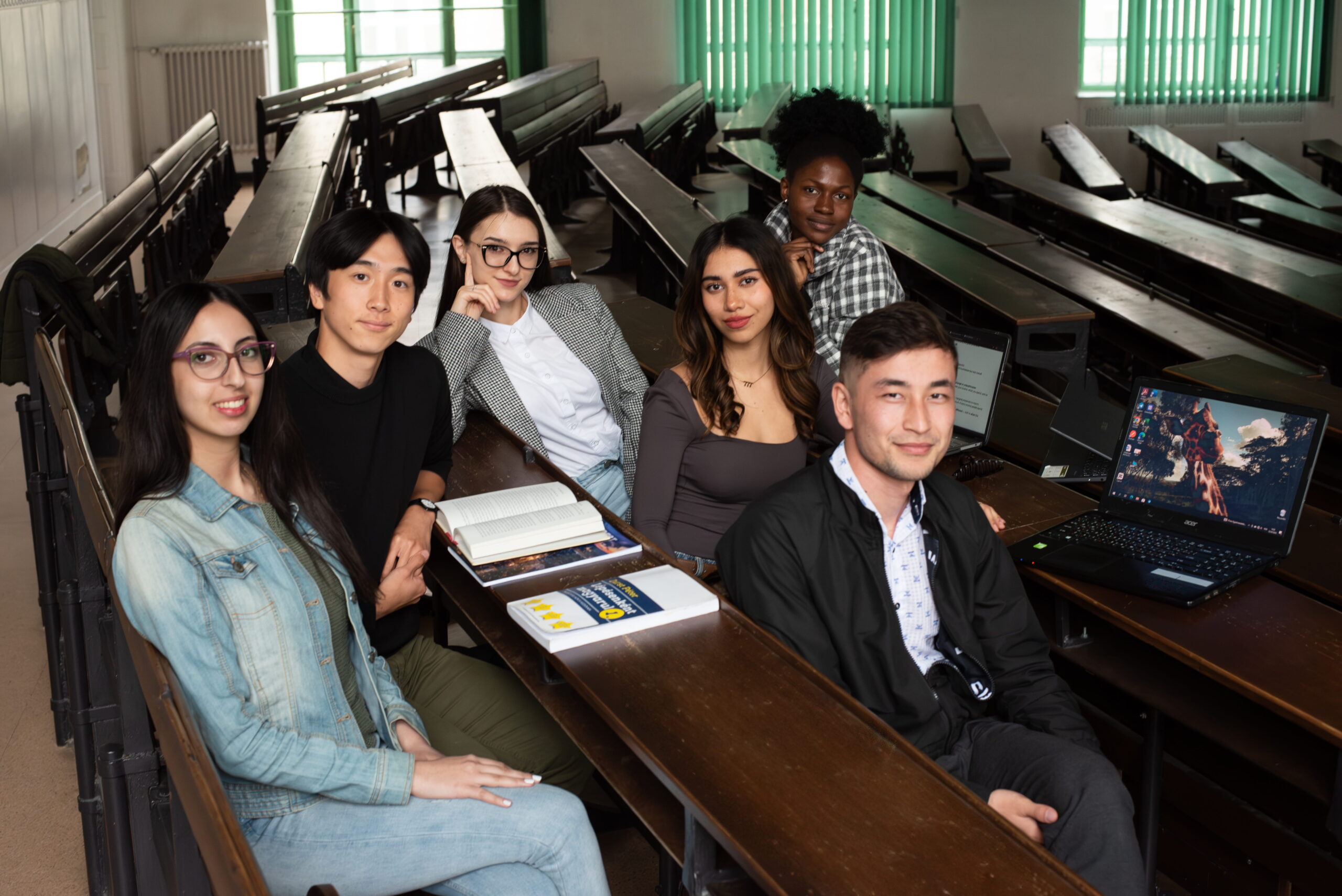
Most international students expect challenges such as finding their way around a new city or adapting to different academic expectations. What many do not expect are the less visible challenges: feeling exhausted after a day of communicating in another language, missing home more than anticipated, or feeling unable to show who they really are.
Drawing on decades of research and practical experience, Dr. habil. Ildikó Rudnák, who has been teaching international students since 1987, shared insights into the emotional and academic realities of studying abroad—from language-related stress and identity questions to the everyday challenges of finding your place in a new culture.
This interview is based on a workshop organized by the Tempus Public Foundation, where Hungarian as a Foreign Language (HFL) teachers came together to learn more about international students’ experiences and explore ways to create more inclusive and supportive learning environments.
If you have ever wondered whether what you are feeling is normal, this conversation may help you better understand your own experience—and remind you that you are not alone.
In your presentation, you emphasized that culture shock often appears in “invisible” forms. How can teachers identify it in the classroom?
Recognizing and addressing the symptoms of culture shock is one of the greatest challenges during the period immediately following arrival, especially in the first semester.
„Physical difficulties (such as fatigue), emotional difficulties (such as missing family), and mental challenges (such as loss of motivation) strongly affect classroom performance, and educators need to pay attention and respond appropriately.”
— Dr. habil. Ildikó Rudnák
If these issues are openly discussed in class, students realize they are not alone in experiencing them, while a supportive attitude helps alleviate negative feelings. Managing culture shock is an integral part of inclusive pedagogy, and open, supportive classroom dialogue can transform it into a successful integration process.
When do students experience culture shock most intensely? What emotional turning points can be observed during the integration process?
Culture shock is not a one-time phenomenon. Those living in a host culture are continuously exposed to it, although symptoms generally become less severe over time.
Naturally, the weeks following arrival are the most critical. This is when the initial excitement of novelty fades, and students confront the harsh realities of everyday administration and academic expectations. Successful and rapid integration is in the interest of both students and institutions.
You described the phenomenon of “freezing” as one consequence of culture shock. How can we tell whether a student is struggling with language difficulties or another type of blockage?
Anyone who speaks a foreign language is familiar with the fatigue caused by constant concentration. Students must find connections and transitions between their native language, their language of study, and the language of the host culture (in this case, Hungarian).
Because Hungarian is an agglutinative language, it is particularly difficult to learn. If an international student has no prior language-learning experience, they must learn not only the language itself but also how to learn a language. Educators should be attentive to this challenge as well.
In your presentation, you spoke about the duality of the “linguistic self” and the “cultural self.” What kind of internal tension does this create for students in practice?
The tension arises from not being able to fully demonstrate one’s knowledge, intellect, or sense of humor in the newly learned language.
Maintaining one’s identity is fundamentally important. As students become more open to the host culture and improve their language skills, this duality gradually dissolves.
At the same time, their personality and interests do not fundamentally change. A student who did not, for example, visit exhibitions or attend theatre performances in their home culture is generally unlikely to start doing so in the host culture, except in rare cases.
You have worked with Russian, Japanese, American, and many other international students. Is integration always difficult for students whose cultures are very different from ours, or are there exceptions?
It largely depends on motivation, diligence, and interpersonal skills. The more local people a student manages to communicate with and form relationships with, the more effectively they can use the language.
Moreover, globalization and information technology have brought people much closer together. Of course, cultural misunderstandings still occur, and they can sometimes lead to surprising or humorous situations.
Are special forms of assessment necessary in international groups?
Both yes and no.
„Students from diverse backgrounds should be given equal opportunities to demonstrate their actual knowledge.”
— Dr. habil. Ildikó Rudnák
Depending on the composition of the group, it is the educator’s responsibility to design the most appropriate assessment methods.
You emphasized the role of the educator as a “cultural mediator.” What does this mean in practice?
International students usually establish their first intensive and regular contact with a Hungarian as a Foreign Language teacher, often through several lessons each week.
This role carries significant responsibility because students are introduced to the host country, its culture, history, geography, and much more through that teacher.
In my view, colleagues are highly aware of this responsibility and do everything they can to support their students.
Your presentation highlighted that emotional intelligence helps us understand people from our own culture, while understanding people from other cultures requires cultural intelligence (CQ). Why might someone with high emotional intelligence not be equally effective in another culture?
A person’s level of emotional intelligence does not change. However, because emotional intelligence (EQ) is culture-specific, cultural intelligence (CQ) becomes the dominant factor in a different cultural environment.
As a result, the emotional intelligence that provides confidence and security at home does not function in exactly the same way in an unfamiliar culture.
There is a saying for this: “CQ begins where EQ ends.”
To what extent can cultural intelligence be learned, and to what extent does it depend on personality?
Of the four dimensions of Cultural Intelligence (CQ)1, the Cognitive dimension is entirely related to the quantity and quality of one’s knowledge and can be acquired through various forms of learning.
The other three dimensions—Motivational, Behavioral, and Metacognitive—require interactions with people from other cultures and experiences gained in different cultural environments.
The more open, extroverted, and curious a person is about other cultures, the more their CQ level develops.
____________________________________________________________________
1 The four-dimensional model of Cultural Intelligence (CQ) was developed by Christopher Earley and Soon Ang. The Cognitive dimension encompasses knowledge about how different cultures function (Earley & Ang, 2003).
Based on your decades of experience, have you observed improvements in the intercultural sensitivity of students or educators?
Absolutely.
Intercultural sensitivity in Hungarian higher education has improved significantly over recent decades. This is largely due to the increasing number of international students, academic mobility programs for both students and staff, and institutional internationalization strategies.
The widespread use of English and direct experiences in multicultural environments—both in Hungary and abroad—have been key contributors to this positive development.
In your opinion, how much of a basic expectation will cultural intelligence become in higher education in the future?
I believe that measuring and developing Cultural Intelligence (CQ) will become a quality requirement in higher education in the future, for both educators and students.
„In a global knowledge environment, CQ is essential for successful collaboration and should become just as integral to education as digital literacy and language skills.”
— Dr. habil. Ildikó Rudnák
Photo: Eszter Láncos, Tempus Public Foundation
References
- Earley, P. C., & Ang, S. Cultural Intelligence: Individual Interactions Across Cultures. Stanford University Press, 2003.